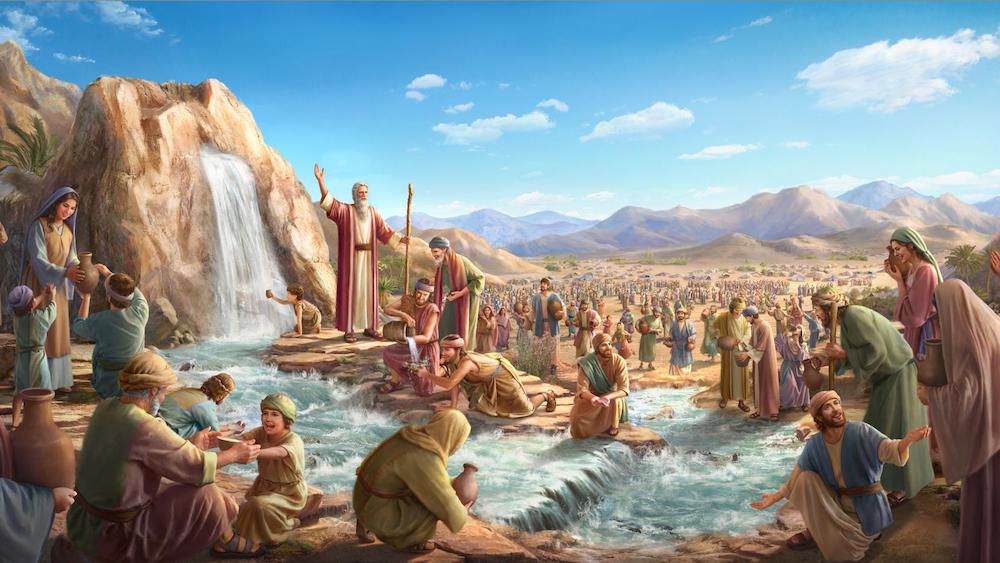
I am sure you will agree with me that the manner in which we behave or act reveals our heart condition before God. Moses was asked to strike the rock and he obediently did so and the outcome was great, Israel had w
ater to drink! However the second time, when he was asked to speak to it for the same outcome as the first, instead, he was so overcome by anger towards Israel that he struck it instead when God had not told him to do
so! Moses' impatience led to anger and he lost self control. The outcome was great, water gushed out of the rock as the first time. But his disobedience cost him entry into the promised land.
Similarly, I will set a scenario of an individual in this present time who may feel that they need to do something again a second time and rush into doing it the same way that they had felt led to do it the first time around when they had prayed and discerned the leading of God.
This second time, they did not take time to pray about it and wait on God because they had th
e first time and the outcome was great. But whatever the outcome may look like, great, just good or bad, God was not the author or the source of that action. This is because they were leaning on their own understanding, taking counsel and direction from self.
This scenario is for us to take counsel from Moses' situation:
The first time, the great outcome is a reflection of obediently carrying out what God asked and therefore ordained the person to do. Like Moses, not seeking God, so as to obey His instructions the second time will cost us because we are in covenant with Him and He expects us to listen and obey.
One might ask "Well, if I follow the instructions God gave the first time, surely it means God is in it this second time too?!"
He may graciously choose to be. However, the questions are
"Don't you think there might be another way God may want you to achieve the same outcome this time around?" As we saw in Moses' case, God wanted him to speak to the rock as opposed to striking it.
So,

"Why are you deciding for God what instructions He plans to give you, even if the situation appears the same or similar. The key word is "appears", the way something appears is not always what it truly is. So we must not presume anything. Where is your respect or reverence for who He is?"
"What is preventing you from seeking Him again this second time even if the outcome is expected to be the same as the first?" "Is it laziness, busyness or even the thought of how long you may have to wait for the answer, as sometimes God will take time to speak or confirm."
In the case of Moses, he had journeyed on with the Israelites and had different experiences with them and also with God, before the situation where God wanted to use the rock a second time as a miraculous instrument through him. So God expected more fortitude of character from him where the Israelites were concerned.
When we are faced with having to do the same thing, or something similar once or over and over again, let us remember the questions above and also that the time between when we did that thing the first time and when we have to do it again, means that we have moved into different circumstances and God expect us, within the time interval to have matured in His wisdom and godly character. Therefore, we are likely to suffer the consequences of our disobedience as Moses did.
Copyright Sept. 2025 Deborah E. Nyamekye
In God’s Ways are Higher, Deborah E. Nyamekye invites readers to reflect on the sovereignty of God and the mysterious, miraculous ways He works—often beyond what the human mind can grasp. This first volume in the Treasures of Wisdom series highlights inspiring case studies from the Bible, drawing lessons from...
Read More
I am sure you will agree with me that the manner in which we behave or act reveals our heart condition before God. Moses was asked to strike the rock and he obediently did so and the outcome was great, Israel had w
ater to drink! However the second time, when he was asked to speak to it for the same outcome as the first, instead, he was so overcome by anger towards Israel that he struck it instead when God had not told him to do
so! Moses' impatience led to anger and he lost self control. The outcome was great, water gushed out of the rock as the first time. But his disobedience cost him entry into the promised land.
Similarly, I will set a scenario of an individual in this present time who may feel that they need to do something again a second time and rush into doing it the same way that they had felt led to do it the first time around when they had prayed and discerned the leading of God.
This second time, they did not take time to pray about it and wait on God because they had th
e first time and the outcome was great. But whatever the outcome may look like, great, just good or bad, God was not the author or the source of that action. This is because they were leaning on their own understanding, taking counsel and direction from self.
This scenario is for us to take counsel from Moses' situation:
The first time, the great outcome is a reflection of obediently carrying out what God asked and therefore ordained the person to do. Like Moses, not seeking God, so as to obey His instructions the second time will cost us because we are in covenant with Him and He expects us to listen and obey.
One might ask "Well, if I follow the instructions God gave the first time, surely it means God is in it this second time too?!"
He may graciously choose to be. However, the questions are
"Don't you think there might be another way God may want you to achieve the same outcome this time around?" As we saw in Moses' case, God wanted him to speak to the rock as opposed to striking it.
So,
"Why are you deciding for God what instructions He plans to give you, even if the situation appears the same or similar. The key word is "appears", the way something appears is not always what it truly is. So we must not presume anything. Where is your respect or reverence for who He is?"
"What is preventing you from seeking Him again this second time even if the outcome is expected to be the same as the first?" "Is it laziness, busyness or even the thought of how long you may have to wait for the answer, as sometimes God will take time to speak or confirm."
In the case of Moses, he had journeyed on with the Israelites and had different experiences with them and also with God, before the situation where God wanted to use the rock a second time as a miraculous instrument through him. So God expected more fortitude of character from him where the Israelites were concerned.
When we are faced with having to do the same thing, or something similar once or over and over again, let us remember the questions above and also that the time between when we did that thing the first time and when we have to do it again, means that we have moved into different circumstances and God expect us, within the time interval to have matured in His wisdom and godly character. Therefore, we are likely to suffer the consequences of our disobedience as Moses did.
Copyright Sept. 2025 Deborah E. Nyamekye
Our God Reigns: Inspirational Prophetic Christian Poetry, Volumes 1-4 by Deborah Esther Nyamekye is a moving collection of poems that both encourage the heart and deepen faith. Written out of personal devotional encounters, these poems reflect God’s unfailing love for His people and the believer’s passionate pursuit of Jesus Christ.
Flowing as...
Read More 















 Wielding the Sword of the Spirit is a heartfelt book of encouragement and inspiration, bringing together teachings and poems that shine a light on God, Jesus Christ, and the journey of the human heart. Each chapter blends uplifting devotionals with poetic songs, psalms, and reflections that speak to both the mind and spirit.
